
Diesel vs Electric vs LPG Forklifts: Which Is Right for Your Business?
The Short Answer
Choose diesel for heavy outdoor work and long shifts, electric for indoor warehouses where emissions and noise matter, and LPG when you need one machine that works both indoors (with ventilation) and outdoors. Diesel has the lowest upfront cost per tonne of capacity, electric has the lowest lifetime running cost, and LPG offers the fastest refuelling and best flexibility.
Diesel forklifts: heavy lifting outdoors
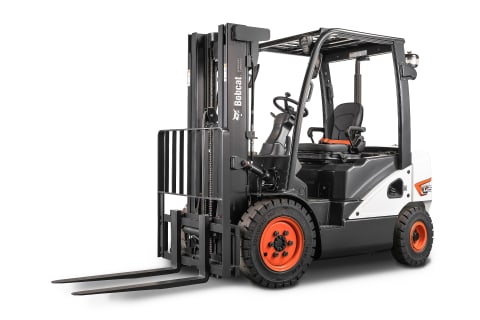
Diesel remains the workhorse for Australian yards, timber mills, ports and construction sites. Diesel engines deliver the highest torque at low revs, which is exactly what you want when lifting heavy loads on ramps or rough ground.
- Best for: outdoor use, loads above 3.5 t, long or multiple shifts
- Capacity range: Bobcat diesel forklifts span 1.5 t right up to 25 t
- Strengths: lowest purchase price per tonne, refuels in minutes, unaffected by rain and dust
- Limitations: exhaust emissions and noise rule out enclosed indoor use
Electric forklifts: clean, quiet warehouse work
Electric counterbalance forklifts have closed the performance gap with combustion machines while keeping their two big advantages: zero exhaust emissions and dramatically lower running costs. Electricity per shift typically costs a fraction of diesel or LPG, and electric drivetrains need far less servicing — no engine oil, filters, radiators or transmissions.
- Best for: warehouses, food and beverage, cold storage, any enclosed space
- Strengths: no emissions, low noise, cheapest cost per hour over the machine's life
- Considerations: higher upfront price; plan charging (or battery swaps) around multi-shift operations
- 3-wheel models offer the tightest turning circles for narrow aisles
LPG forklifts: one machine, indoors and out
LPG (forklift gas) sits between the two. Combustion power means all-weather outdoor capability and fast bottle-swap refuelling, while cleaner-burning gas allows indoor use in well-ventilated buildings. If your forklift moves between the dock, the yard and the warehouse floor all day, LPG is usually the answer.
- Best for: mixed indoor/outdoor duty, sites without charging infrastructure
- Strengths: 2-minute bottle swaps, consistent power for the whole shift, lower emissions than diesel
- Considerations: gas bottle supply contracts; ventilation still required indoors
How to decide: three questions
Still unsure? Our team specs forklifts for Australian businesses every day — call 03 7053 2937 or request a quote and we'll recommend the right machine for your site, loads and budget.
- Where will it work? Enclosed indoors → electric. Outdoors only → diesel. Both → LPG.
- How heavy are your loads? Above 5.5 t the choice is effectively diesel.
- How many hours per week? Under ~20 hours, upfront price dominates (diesel/LPG). Over 40 hours, electric's low running costs usually win the total-cost-of-ownership calculation.
Frequently Asked Questions
Which forklift type is cheapest to run?
Electric forklifts are the cheapest to run over their life. Electricity costs less per shift than diesel or LPG, and electric drivetrains need less scheduled servicing. Diesel is usually the cheapest to buy upfront.
Can LPG forklifts be used indoors?
Yes, LPG forklifts can be used indoors provided the building is well ventilated. For fully enclosed spaces, cold storage or food production, an electric forklift is the safer choice.
How long does an electric forklift battery last per charge?
A properly sized battery will run a full 8-hour shift on one charge in typical warehouse duty. Multi-shift operations use opportunity charging during breaks or spare battery packs.
What size forklift do most Australian businesses buy?
The 2 t to 3.5 t capacity class is the most popular in Australia, handling standard pallets up to full loads of bricks, drums or produce. Bobcat's 7-Series covers this class in diesel, electric and LPG.
Need help choosing the right equipment?
Our team specs Bobcat equipment for Australian businesses every day. Get expert advice and a fast quote.


